Mangalsutra and Sindoor: The Sacred Symbols of a Hindu Marriage

Last updated: 18 May 2026

Two Symbols, One Promise
Two Symbols, One Promise - Mangalsutra and Sindoor: The Sacred Symbols of a Hindu MarriageTwo Symbols, One Promise - Mangalsutra and Sindoor: The Sacred Symbols of a Hindu Marriage

In the final moments of a Hindu wedding ceremony, after the seven pheras and the sacred vows, comes a gesture so intimate and so loaded with meaning that it often reduces the entire gathering to silence.

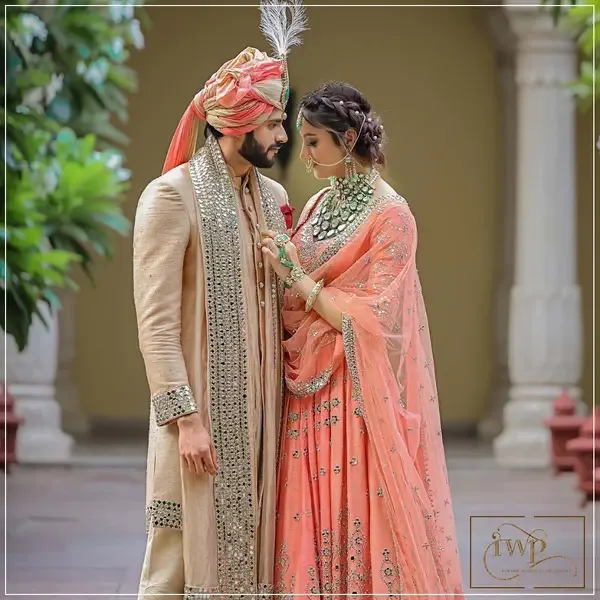
The groom lifts a small amount of vermillion sindoor and places it gently in the parting of the bride's hair. Then he ties a beaded necklace the mangalsutra around her neck. In two simple acts, she is transformed. Not diminished, not possessed transformed. She enters a new phase of her life, marked by these ancient symbols.

What Is the Mangalsutra?

What Is the Mangalsutra? - Mangalsutra and Sindoor: The Sacred Symbols of a Hindu Marriage

The word mangalsutra is Sanskrit: mangal meaning auspicious or blessed, and sutra meaning thread or cord. Together: the auspicious thread. It is traditionally a necklace of black and gold beads strung on a yellow thread, though the design varies enormously by region and community.

The black beads are believed to ward off evil and protect the marriage from negative energy. The gold represents prosperity and purity. Together, they symbolize the couple's commitment to each other's wellbeing not just their love, but their active protection of the life they are building.

The Spiritual Role of the Mangalsutra

In Vedic tradition, the mangalsutra is not merely ornamental. It is believed to be energetically linked to the husband's life force which is why a woman traditionally never removes it voluntarily. It is a prayer worn on the body, a continuous invocation of blessings for the marriage and the family.

In many communities, the priest sanctifies the mangalsutra before it is tied, chanting mantras that infuse it with intention and divine blessing. The moment of tying it is accompanied by specific verses that speak of protection, love, and eternal companionship.

What Is Sindoor?

Sindoor is vermillion a deep red powder applied to the parting of a married woman's hair by her husband. It is one of the most visually striking symbols in all of Hindu culture, and one of the most ancient.

Red is the color of Shakti feminine power and energy. It is also the color of prosperity, life, and the divine feminine in Hindu cosmology. When a husband applies sindoor to his wife's hair, he is not marking her as his property he is invoking divine protection over her, placing her under the blessing of the goddess.

The Act of Applying Sindoor Why It Matters

The first application of sindoor by the husband during the wedding ceremony is called the sindoor daan. It is one of the most emotionally charged moments in a Hindu wedding perhaps because it is so personal. Unlike the grand spectacle of the baraat or the joyful noise of the jaimala, the sindoor daan is quiet. It is just two people, and a promise.

In the years that follow, a husband applying sindoor to his wife's hair is a recurring act of love and renewal of that original promise. Many couples maintain this practice on special occasions even decades into their marriage.

Regional Variations in Design and Tradition

The design of the mangalsutra changes dramatically across India. In Maharashtra, the traditional mangalsutra has two gold vatis joined at the center. In Tamil Nadu, the thali the equivalent of the mangalsutra is a gold pendant specific to each community. In Karnataka, the style differs again. In North India, the black and gold bead design is most common.

Similarly, sindoor traditions vary. In Bengal, women apply sindoor not just to their hair parting but also to the inner corners of their eyes during special occasions. In some communities, sindoor is applied fresh each morning as a devotional act.

Modern Conversations Around These Symbols

It would be dishonest not to acknowledge that some modern women have complicated feelings about mangalsutra and sindoor. The question of why these symbols apply only to women and not to men is a fair one, and many couples are thinking about it consciously.

Some couples are designing matching jewelry that both partners wear. Others are holding onto the tradition for its spiritual significance while having open conversations about what it means to them personally. What I find beautiful is that the conversation itself between partners, between generations is a form of respect for both the tradition and each other.

A symbol only has power when it is chosen with understanding. And for millions of women across India and the world, the mangalsutra and sindoor remain powerful, cherished, and deeply meaningful.

Frequently Asked Questions

Is wearing a mangalsutra mandatory for a married Hindu woman?

Traditionally, yes — but in practice, many modern women choose when and whether to wear it. The spiritual intention behind it matters more than constant physical wearing.

What happens to the mangalsutra if a husband passes away?

In traditional practice, a widow removes her mangalsutra. However, many modern families and women have moved away from this custom, viewing the mangalsutra as a personal symbol of love rather than a status marker.

Can the mangalsutra design be customized?

Absolutely. Many couples today commission custom mangalsutras that reflect their personal style while honoring the spiritual essence of the tradition.

Why are the beads in a mangalsutra black?

Black beads are believed to absorb and neutralize negative energy, protecting the marriage and the husband's wellbeing.

Is sindoor only applied during the wedding?

No. Many married women apply sindoor daily as a devotional practice. It is also applied fresh during religious festivals and auspicious occasions.

Do men have any equivalent symbol of marriage in Hindu tradition?

In most traditional Hindu communities, there is no male equivalent. Some modern couples are changing this by designing matching bands or jewelry for both partners.

Connect with Verified Hindu Matrimony Profiles

We provide dedicated matrimony services for the Hindu community, helping individuals and families connect with verified Hindu profiles for meaningful, lasting relationships.

Rahul

37 yrs • Noida

Business / Self Employed

Divorced View Profile

Ss

34 yrs • Hisar

Business / Self Employed

Never Married View Profile

Zzzzzz

31 yrs • New Delhi

Private Company

Divorced View Profile

Geethika

23 yrs • Kovvur

Not Working

Never Married View Profile

***** *****

26 yrs • Farnewadi

Private Company

Never Married View Profile

***** *****

22 yrs • बरेली

Not Working

Never Married View Profile
View All Hindu Matrimony Profiles

Learn More About This Topic

Explore Helpful Matrimony Pages

View Matrimony Trends & Insights

🔍 Find Your Match

Answer 2 quick questions to see matching profiles

Step 1 of 2 — Choose Religion

Select the religion you are looking for in a partner

Find your perfect match today
Login Register Free