
Genuine Matrimony Service: Authentic Matchmaking That Goes Beyond the Profile

Most matrimony platforms ask you to sell yourself. Better photographs. Polished career summaries. A carefully worded paragraph about your hobbies. What they rarely ask — and almost never measure — is who you actually are when nobody's watching. That gap between presentation and reality is precisely where so many marriages begin to struggle. matrimony free
A Genuine Matrimony Service is built around one uncomfortable truth: lasting marriages are not founded on perfection. They are built on authenticity — on two people who have been honest enough with themselves, and with each other, to connect as they truly are. Not as they were advised to appear. free marriage help
This is not just a philosophy. It is a structural difference in how the entire matching process is designed. free marriage bureau Agarwal Traditional Matchmaking – Sacred Unions Through Ancient Wisdom Agarwal Samaj Marriage Service – Community-Governed Matchmaking
What "Authenticity" Actually Means in Matchmaking
The word gets thrown around a lot. But in the context of matrimony services, authentic compatibility assessment means something specific: moving past income brackets, height requirements, and complexion preferences — the kind of checklist criteria that families have used for generations — toward the factors that genuinely predict whether two people will thrive together.
Communication styles. Approaches to conflict. Emotional responsiveness. How someone treats people when they are tired, stressed, or disappointed. These are not romantic abstractions. They are the daily reality of a shared life, and they are exactly what most platforms never bother to examine.
The matching framework here is built around what might be called an Authenticity Framework — a multi-dimensional compatibility assessment that takes behavioral patterns seriously, not just self-reported preferences. There is a meaningful difference between what people say they value and how they actually behave. Good matchmaking accounts for both.
Vulnerability, Real-Life Matching, and the Genuine Connection Index

One of the more distinctive elements of this service is something called the Vulnerability Integration Protocol — which sounds clinical but is, in practice, quite simple. It creates structured, judgment-free spaces where users can work through guided reflection exercises and move past the curated version of themselves they have been presenting to the world.
Why does this matter? Because most people entering the matrimony process carry two sets of expectations: their own, and their family's. Often, these overlap only partially. The reflection process helps users identify which expectations genuinely resonate with their own values and which have simply been absorbed by proximity. That distinction, small as it sounds, changes everything about how compatibility is assessed.
Real-Life Matching: Moving Past the Highlight Reel
Online matrimony has a highlight reel problem. Everyone looks their best, writes their wittiest bio, and presents the version of themselves they would most like to be seen as. This is understandable. It is also deeply unhelpful when it comes to predicting long-term compatibility.
The Real-Life Matching approach sidesteps this entirely. Rather than evaluating idealized profiles, it uses structured activities designed to reveal how two people interact in ordinary, unstaged moments — the kind of everyday friction and warmth that no curated profile can replicate.
- How does someone respond when a plan changes unexpectedly?
- How do they navigate disagreement when the stakes feel personal?
- What does their humor look like when they are not performing for an audience?
These interactions tell you more in an hour than a profile tells you in a month.
The Genuine Connection Index
Compatibility scoring, when done well, should rely on observable behavior — not just what users claim to want. The Genuine Connection Index does exactly this. It measures how users actually communicate during structured interactions, how they respond to hypothetical relationship challenges, and the quality of empathy they demonstrate toward others. It is, in short, a behavioral portrait rather than a static checklist.
For users who value privacy — and many do — a Gradual Authenticity model allows self-disclosure to unfold at a natural pace. More personal aspects of identity are shared only as trust develops, which mirrors the organic rhythm of real relationships rather than forcing intimacy before it has been earned.
If you are just beginning this process, Corishta's guide on how to create the perfect matrimony profile offers grounded, practical advice on presenting yourself honestly rather than just impressively. And if you are unsure whether you are ready to begin at all, these five signs you are ready for marriage are worth sitting with before you take the first step.
Cultural Authenticity, Self-Discovery, and Diaspora Support
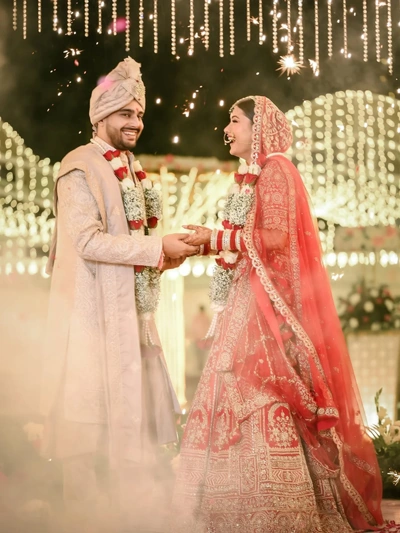
Culture is not the enemy of authenticity. But performed culture — traditions maintained out of social habit rather than genuine meaning — can quietly undermine a marriage before it has properly begun.
The Cultural Authenticity Integration tools built into this service are designed for exactly this tension. They help users work through the often complicated space between family expectations and personal truth, distinguishing between traditions that genuinely resonate and those that have simply been inherited without examination. The goal is not to reject cultural identity but to engage with it consciously — and to find partners who share an authentic cultural connection rather than one built on mutual performance.
Self-Discovery Before Partner Discovery
There is a step that most matrimony services skip entirely: helping users understand themselves before they start evaluating others. This service builds that preparatory work in deliberately. Personality assessments, relationship history analysis, value clarification exercises — these are offered not as optional extras but as a genuine foundation for what follows.
The reason is practical. One of the most common patterns in failed matrimonial matches is projection: people pursue partners who fit the expectations absorbed from family and community, without ever asking whether those expectations reflect their own actual needs. Self-discovery work interrupts that pattern early.
Support for the Diaspora Experience
For Indian families living overseas, the challenge is layered. There is the genuine pull of cultural identity, the desire to maintain a meaningful connection to heritage — and alongside it, the pressure to perform that identity for family and community back home. These are not the same thing, and matching built on the latter rarely holds.
The Authentic Cultural Integration support offered to diaspora members is specifically designed to help users navigate this. It separates meaningful cultural practice from social obligation, enabling matches grounded in real shared values rather than a shared performance of heritage. For families navigating life between two cultures, this distinction is not subtle — it is foundational.
Specialized counselors are available throughout the process, offering mediation where personal needs and family expectations come into genuine tension. Not to dismiss either side, but to find honest common ground — which is, ultimately, the only ground worth building a marriage on.
For those interested in the research behind what makes two people truly compatible, the Wikipedia article on compatibility in relationships provides useful grounding. And for a deeper look at why emotional intelligence features so prominently in behavioral matching, the Wikipedia page on emotional intelligence offers helpful context.
A Genuine Matrimony Service will not promise you a perfect match. It will do something more valuable: it will help you understand what you are actually looking for — and then introduce you to someone who has done the same.