
Family-Based Matchmaking Service – Where Every Generation Has a Voice
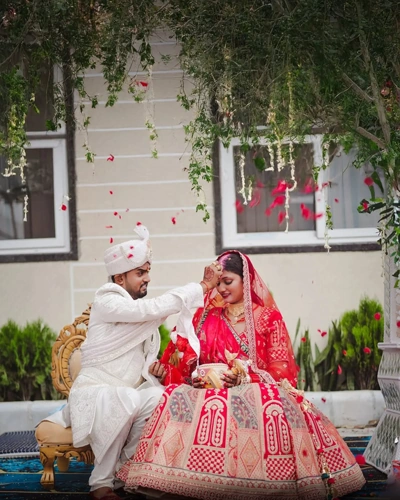
For many cultures, marriage has never been only about two individuals — it has always been the coming together of two families. The Family-Based Matchmaking Service is built entirely around that reality, treating family involvement not as a hurdle to manage but as a genuine source of strength. From the very first interaction, the process is designed to make space for multiple generations: grandparents, parents, siblings, and the couple themselves. Everyone is heard. Everyone's perspective is carefully documented. And throughout it all, the couple retains complete authority over the final decision. This is not the old model of arranged marriage where individuals had little say — it is something more considered, more collaborative, and ultimately more sustainable. matrimony free
At the heart of the methodology is the "Family Profile Matrix," a structured framework that captures compatibility across several dimensions at once — core values, religious practices, business considerations, and lifestyle expectations. Trained relationship consultants conduct individual interviews with family members across generations, then synthesise everything into a unified compatibility picture that represents all perspectives without letting any single voice dominate or create conflict. It is a process that takes time, but the marriages it produces begin on far firmer ground. free marriage bureau
Family Ambassadors, Generational Dialogue, and Compatibility Mapping
One of the service's most practical innovations is the "Family Ambassador" system. Each household nominates a single representative — often an unmarried aunt or uncle who carries genuine community standing — to serve as the primary liaison with the service. This person channels all family communication in a respectful, culturally appropriate way, ensuring that individual members cannot unilaterally shift the direction of negotiations. It is a small structural choice that prevents a great deal of unnecessary tension. Agarwal Traditional Matchmaking – Sacred Unions Through Ancient Wisdom Agarwal Samaj Marriage Service – Community-Governed Matchmaking Trusted Agarwal Matrimony – Verified, Fraud-Free Community Matchmaking
Families are also brought into "Generational Dialogue" sessions, moderated by cultural specialists, where elders and younger members discuss their expectations together in a guided setting. These conversations are carefully facilitated to translate traditional values into language that resonates across age groups. The concept of "family honour," for instance, might be reframed as "shared responsibility for relationship success" — preserving the underlying wisdom while making it genuinely meaningful to a younger generation navigating a different world.
Where family dynamics are more complex — step-relatives, non-traditional living arrangements, blended households — the service provides "Family Integration Mapping," a specialised assessment designed to find matches with similarly structured families. Addressing these potential friction points before a match is finalised, rather than after, is one of the most valuable things a service like this can do. The "Family Compatibility Dashboard" makes this process visible to everyone involved, presenting alignment and areas for compromise in a clear, transparent format that keeps negotiations focused on shared priorities.
Families exploring this service alongside broader matrimonial options may also find value in Corishta's Free Marriage Service and the community-focused Free Rishta Online platform, both of which support culturally rooted introductions within a trusted network.
Family Transition Support, Modern Challenges, and Diaspora Integration
Finding the right match is only part of the journey. What happens after the wedding — how a new couple establishes its own household identity while staying meaningfully connected to both extended families — is where many marriages face their first real tests. The service's "Family Transition Support" program addresses this directly, offering structured guidance on managing expectations around financial contributions, living arrangements, and involvement in family businesses. These are among the most common sources of post-marriage tension, and having a framework in place before they arise makes a significant difference.
Contemporary realities are also built into the service's approach through what it calls the "Evolving Family Framework." This helps families think through modern challenges openly — gender roles in dual-career households, the practicalities of remote work, how to maintain cultural traditions when families are spread across different cities or countries. The goal is not to abandon traditional family wisdom but to ensure it remains relevant and workable in the actual lives couples are living today.
Diaspora families receive dedicated support through "Transcontinental Family Integration" — guidance that spans visa processes, cultural adaptation across borders, and the everyday logistics of keeping family connections alive across time zones. A family with members in three different countries faces genuinely different challenges than one rooted in a single city, and this service recognises that fully rather than treating it as an edge case.
For practical advice that complements this service, the Corishta blog covers topics directly relevant to family-involved marriages, including how to navigate parental conversations around marriage choices and managing work-life balance after marriage. For broader historical and cultural context, the Wikipedia article on arranged marriage and the Wikipedia page on Hindu wedding traditions provide useful background reading.