Komti Matrimony Profiles
Showing 2+ verified profiles · Komti
Komti Matrimony Profiles on Corishta features 2+ verified profiles. This page helps families compare background, community preferences, and marriage intent before taking the next step.
Komti Matrimony – Merchant Heritage and Telangana Tradition
Born to Trade, Trained to Endure
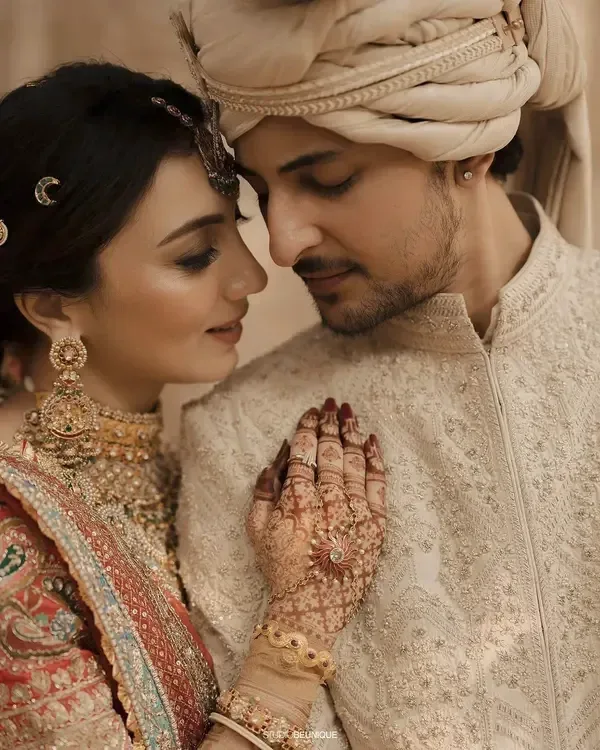
The Komti community also known as Arya Vaishya has been the mercantile backbone of the Deccan plateau for millennia. Long before the Silk Road was mapped, Komti traders were moving goods spices, textiles, grain, livestock across routes that connected the coast to the interior. This is not a community that stumbled into commerce; it is a community that was formed by commerce, shaped by the demands and disciplines of trade conducted over long distances, across monsoons, and against uncertain political climates.
The Komti merchant operates from a set of values that were tested in conditions most modern professionals will never face: extending credit to strangers based on reputation alone, traveling for months without news of home, maintaining ledgers in conditions of heat and dust that modern accounting departments would find impossible. The character that emerges from this history is specific: patient, observant, capable of deep loyalty, and absolutely clear about the difference between a person's word and their performance.
The Komti Home: Prosperity with Purpose

A Komti household carries the specific warmth of a family that understands abundance as responsibility. Wealth, in the Komti value system, is never private it flows through community channels, funding temples, schools, marriages of less fortunate community members, and the agricultural infrastructure on which everyone ultimately depends. The merchant who hoards is a figure of contempt in Komti culture; the merchant who uses his surplus to build community infrastructure is the figure of admiration.
The home itself reflects this orientation toward quality without ostentation. The kitchen is well-equipped and the cooking is excellent Komti cuisine blends Telangana flavors with specific community recipes that are prepared only on certain occasions. The pooja room is central to the home's spatial organization, and the daily worship practices reflect a sincere rather than performative devotion.
Meeting of Families: Trust Before Transaction
When Komti families meet for a matrimonial discussion, they are in a sense conducting the oldest business process in their cultural vocabulary: the assessment of trustworthiness. Every element of the meeting is read through this lens. Does this family honor their invitations? Do they arrive when they said they would? Do the elders speak with the same consistency in informal moments as in formal ones?
The questions asked about the prospective match will touch on education and profession, but they will also, inevitably, touch on the family's reputation in the community who knows them, what their word is worth, whether they have been involved in business or personal disputes. This is not gossip; it is due diligence of the kind that Komti merchants have been conducting for centuries.
The Komti Festival Calendar and Worship Traditions

The Komti community has specific deity traditions Kanaka Durga, Venkateswara, and specific kula devatas associated with the different sub-lineages within the community. Festival observance is taken seriously, and the specific forms of worship vary by family and sub-community in ways that require actual attention rather than generic Hindu participation.
Ugadi, the Telugu New Year, is perhaps the most emotionally significant festival in the Komti calendar more intimate than Diwali, more personally reflective, and organized around the consumption of ugadi pachadi, a preparation that combines the six rasas (tastes) as a metaphor for the year ahead. The family that gathers around this pachadi on Ugadi morning is the community at its most unguarded and genuine.
What Komti Families Seek in a Match
The Komti community values steadiness above brilliance. A prospective match who is quietly competent, financially literate, and genuinely loyal to their own family will be received with more enthusiasm than someone who dazzles in the first meeting and fades upon closer acquaintance. The community has had too much experience evaluating people to be easily impressed by surface qualities.
- Merchant heritage creates a community-wide emphasis on word, reputation, and reliability
- Telugu language and Telangana cultural affinity are important identity markers
- Kula devata worship traditions vary by sub-lineage and are important to establish in alliances
- Ugadi is the most emotionally significant annual festival in Komti households
- Community charity and support networks remain active and are an expression of merchant values
Komti Matrimony FAQs
Are Komti and Arya Vaishya the same community?
Yes, Komti is the regional name for the community more formally known as Arya Vaishya, particularly in Telangana and parts of Andhra Pradesh. The community is also related to the Chettiar and Banian trading communities in other regions. Within the community, sub-lineages are distinguished by specific kula devata traditions and historical occupational specializations.
What language and cultural background do Komti families typically share?
Telugu is the primary language for most Komti families, with Telangana and Andhra cultural practices forming the core of community identity. Specific community vocabulary, culinary traditions, and festival forms are distinct from mainstream Telugu culture and serve as markers of Komti identity.
How important is the kula devata in Komti matrimonial compatibility?
Kula devata affiliation is verified in most Komti matrimonial searches. The major kula devatas include Kanaka Durga and Venkateswara. Families with the same kula devata share a specific form of worship and festival observance that deepens compatibility. Different kula devatas are generally compatible but require some coordination of ritual calendars.
What professional backgrounds are most valued in Komti matrimonial searches?
Business, commerce, finance, and professional services are highly valued, reflecting the community's mercantile heritage. Government service and medicine are also well-regarded for their stability and social prestige. The key qualities are financial competence, reliability, and a practical orientation toward building long-term security.
Best State-wise Destinations for Komti Matrimony: top Indian states
Komti matrimony demand varies across India, and these top states show where verified profiles and serious matchmaking intent are strongest right now.
No state-level distribution available yet.
Browse Komti Matrimony by Cities
Use these city pages to compare Komti matrimony matches and connect with families seeking serious marriage alliances.
City pages are refreshed with active profile availability for reliable matchmaking discovery.