Bhandara Hindu in Bhandara Matrimony Profiles
Showing 7+ verified profiles · Hindu · Bhandara · Bhandara
Browse 7+ verified Bhandara Hindu in Bhandara Matrimony Profiles on Corishta. Families exploring suitable matches in Bhandara can review active profiles, shortlist preferences, and connect with genuine members.
🔒 View More Profiles
Register free to see full profiles, contact details, and photos.
- or -
Hindu Matrimony in Bhandara – Vidarba's Heartland Matches
The Rice Bowl of Vidarbha, Where Roots Run Deep
Bhandara district sits quietly in eastern Maharashtra, its identity shaped by the endless paddy fields that turn golden in winter and the orange groves that give the region its distinct agricultural soul. It is a place where people know each other by family name, where the temple is the community's common room, and where marriage is understood as one of the most sacred acts of community continuity. Hindu families in Bhandara carry this understanding in their bones.
To find a match in Bhandara is to engage with a world where reputation matters, where the village priest's opinion carries weight, and where a quiet family of good standing is preferred a thousand times over a wealthy family of uncertain character. The city is modest in scale but deep in its sense of self.
Cultural Identity of Bhandara's Hindu Community
Bhandara's Hindu population is primarily Kunbi-Maratha, Teli, Mahar (Buddhist converts notwithstanding), Brahmin, and Bania communities, each with their own matrimonial circles. The dominant agricultural identity gives even urban residents in Bhandara town a connection to land, seasons, and the rhythms of farming life. Festivals like Nag Panchami, Makar Sankranti, and Gudi Padwa are observed with full community participation.
The language is Marathi a Vidarbha-inflected Marathi that feels more direct and less ornamented than the Pune or Nashik variety. This directness extends to matrimonial discussions: families here don't dance around expectations. They say what they want and they mean what they say.
Marriage Traditions Unique to Bhandara
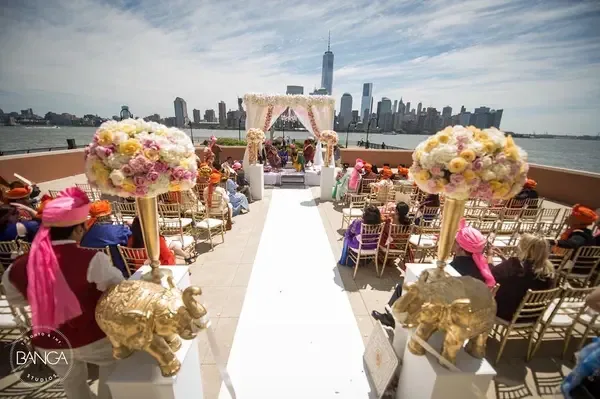
Hindu weddings in Bhandara are characterised by their warmth and communal nature. The entire neighbourhood participates cooking, arranging furniture, greeting guests. A wedding here is never a private affair. The mandap is often set up in an open courtyard, and the ceremony is conducted in Marathi with Vedic rituals led by the family's trusted pandit.
- Haldi and Mehendi: Women of the community gather the evening before, often at the bride's home
- Sakhar puda: The formal engagement ceremony, simple and intimate
- Var puja: Groom's welcome at the wedding venue by the bride's family
- Five-day celebrations: Traditional families observe multiple days of ritual before and after the wedding
- Communal feasts: Puri-bhaji, sabudana khichdi, and local rice preparations are wedding staples
What Bhandara Families Expect from a Match

Families in Bhandara look for stability above all else. A government job in teaching, in the district offices, in the railways carries enormous social prestige. Education is valued, but so is proximity: a son-in-law who lives far away is not viewed with complete enthusiasm. Many families prefer matches within a 50–100 km radius to maintain close family ties.
For women, expectations have evolved considerably. Girls from Bhandara today are educated up to graduation and often pursue B.Ed degrees, nursing, or bank clerk positions. They seek partners who will respect their education and allow them a degree of autonomy while maintaining the structure of a joint or semi-joint family life.
The Emotional Texture of Life in Bhandara

There is a particular sweetness to life in Bhandara that those who have grown up there carry with them wherever they go. The smell of fresh paddy after the rains, the Diwali lamps reflected in the Wainganga canal, the sound of kirtan from a distant temple on a winter night these are the experiences that make Bhandara people who they are. A marriage made here is not just a legal or social arrangement. It is a continuation of all of that.
Couples who meet through family introductions in Bhandara tend to have a particular groundedness. They have not been swept away by the anonymity of a metropolis. They know who they are, where they come from, and what they owe to the community that raised them.
Finding Your Hindu Match in Bhandara
Online matrimony platforms have reached Bhandara, and younger generations use them alongside community networks. A profile here should reflect not just education and job details, but family values, religious practice, and language comfort. State that you are from Bhandara with pride it signals exactly the kind of person many families are looking for.
Bhandara - Location Map
Explore the area and discover matrimony profiles near Bhandara.
Bhandara Matrimony FAQs
Which communities are most prominent in Bhandara Hindu matrimony?
Bhandara has a strong Kunbi-Maratha, Teli, Brahmin, and Bania community presence. Each community has its own matrimonial norms, but all share an emphasis on family reputation, agricultural or service-sector stability, and community participation.
Do Bhandara families prefer local or out-of-district matches?
Many Bhandara families prefer matches within the Vidarbha region — particularly from Nagpur, Gondia, Chandrapur, and Gadchiroli. Out-of-region matches are accepted but proximity is valued for maintaining family relationships post-wedding.
What professions are most respected in Bhandara matrimonial searches?
Government employment, particularly in teaching, banking, railways, and district administration, carries the highest social prestige. Private-sector jobs in Nagpur are also considered stable. Agricultural landholding is still a positive factor in many rural families.
Are horoscope and kundali matching practised in Bhandara?
Yes, particularly among Brahmin and Maratha families. Most families consult a trusted pandit before finalising any match. Kundali matching is especially important for the bride's family.
How have matrimonial platforms changed match-seeking in Bhandara?
Online platforms have expanded the search radius and given younger people more agency in reviewing profiles. However, family involvement remains central — most searches are initiated or reviewed by parents, and final meetings always involve both families.