
Agarwal Traditional Matchmaking: Where Sacred Ritual Shapes Every Introduction
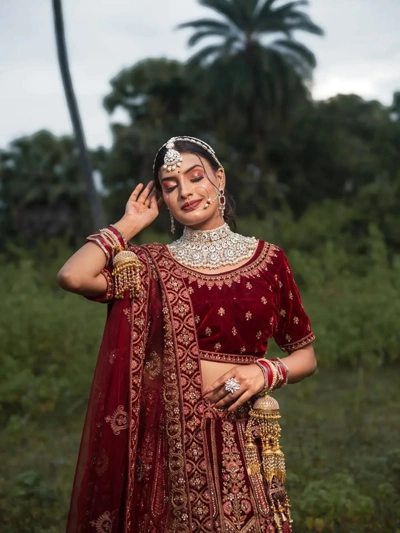
There is a conviction that has quietly guided Agarwal families across generations — that marriage is not an arrangement to be optimised, but a samskara, a sacred rite of passage deserving the same care and reverence as any spiritual undertaking. Agarwal Traditional Matchmaking is built directly on that belief. Not on algorithms. Not on swipe-based profiles or impersonal filters. On human wisdom. matrimony free
Experienced saman — matchmakers who have spent years immersed in Agarwal community life — bring something no software can replicate: the ability to read unspoken family dynamics, cultural signals, and the kind of subtle social cues that only reveal themselves through years of close community involvement. The journey begins with parichay ceremonies held in temple settings, a deliberate choice that immediately anchors the process in the spiritual dimension that sits at the very heart of Agarwal tradition. free marriage help
From the first conversation, this isn't matchmaking as a transaction. It's matchmaking as a practice. free marriage bureau Agarwal Samaj Marriage Service – Community-Governed Matchmaking Trusted Agarwal Matrimony – Verified, Fraud-Free Community Matchmaking
The process follows a structured shadi sanskar sequence where each stage carries distinct cultural weight. After initial kanyadaan discussions, community astrologers who specialise in Agarwal kundali traditions facilitate rashi pariksha — horoscope analysis that goes far beyond a surface compatibility check. It examines business fortunes, family health patterns, generational tendencies. The Agarwal understanding of marriage is holistic: what touches one dimension of life eventually touches all of them. When the process advances to the vaar (proposal) stage, ritual exchanges of laddoos and pooja items preserve symbolic continuity even when the families involved live on opposite sides of the world.
Ritual-Rooted Assessments That Go Beyond the Obvious
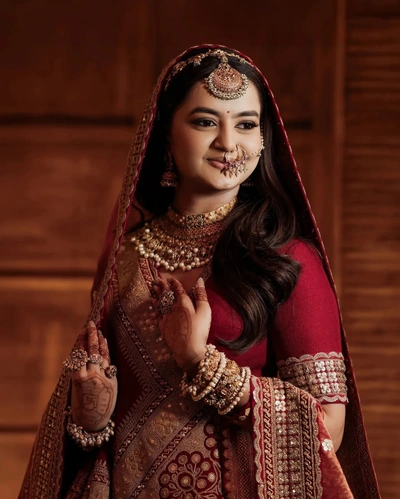
What makes Agarwal Traditional Matchmaking genuinely different — and this is worth slowing down on — is how it approaches financial compatibility. Most services ask for salary figures. This one asks different questions entirely.
The dhan-dhan (wealth assessment) process evaluates financial health through a cultural lens: How does a family handle debt? What is their history of daan (charitable giving)? Are their business dealings guided by ethics, or purely by expediency? Within the Agarwal worldview, these questions say far more about long-term stability and character than a payslip ever could. And by honouring the principle of lajjawali (modesty), this approach removes the social awkwardness of blunt financial interrogation while still ensuring that economic compatibility is genuinely, carefully assessed.
Then there is the mukh-vilok process — observing potential partners in natural community settings. A satsang gathering. A bhandara (community feast). Watching someone move through a real religious or social environment reveals character in ways a staged meeting rarely can. Qualities like santokh (contentment) and daya (compassion) show themselves when people are simply living — not performing for an introduction.
The karma-swaroop (action-based compatibility) layer adds yet another dimension. Matchmakers observe how families respond during genuine community moments:
- How do they show up during a temple fund drive?
- What does their response to a local crisis say about their values?
- Do they lead, follow, or quietly do the work without recognition?
These are not questions anyone asks on a matrimonial form. But they speak directly to values like seva (service) and sahayog (cooperation) — the kind of values that actually determine how a marriage functions over decades, not just how it begins.
For families wishing to explore compatible profiles alongside this traditional process, Corishta's Free Agarwal Matrimonial and Baniya Matrimonial pages offer a trusted starting point within the broader Vaishya community network.
Preserving Cultural Continuity for Diaspora and Regional Families
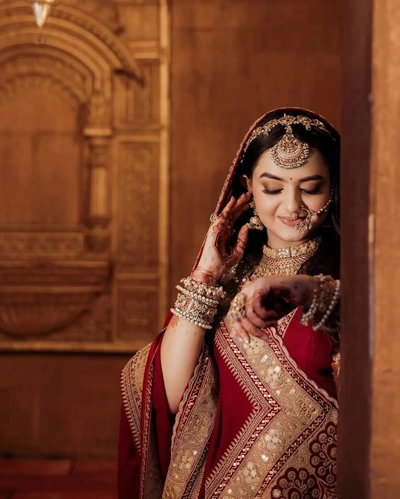
For Agarwal families settled abroad — in the UK, Canada, the Gulf, Australia — the challenge isn't just finding a suitable match. It's finding one without losing the thread of who you are.
This service addresses that directly through dedicated cultural continuity protocols. Elders play an active, verified role in confirming that meaningful practices — Braj Bhasha prayers, specific pooja rituals, family ceremony customs — are genuinely preserved across generations, not merely claimed. Matchmakers may use video recordings of actual family ceremonies to assess authenticity. Distance doesn't have to mean dilution.
Honouring Regional Distinctions Within the Community
The Agarwal community is not monolithic, and this service doesn't treat it as such. Punjabi Agarwals' bhangra wedding traditions and UP Baniyas' dastarkhan dining customs are both actively protected through matchmakers who are specifically trained in those regional practices. Where inter-regional matches are facilitated, that specialisation becomes particularly important — it supports meaningful knowledge transfer between families, so neither side feels pressed to quietly let go of their heritage.
That's a subtle but significant distinction. Cultural preservation isn't just about what survives in one household. It's about what gets understood and respected by the family being joined to it.
How Communication Is Managed — and Why It Matters
Throughout every stage, the sanyam (restraint) principle shapes how discussions flow. All substantive family conversations are handled through matchmakers rather than directly between the parties. This isn't a formality — it's a safeguard. It removes the very real risk of misunderstandings that could cause abhaav (disrespect) and quietly damage relationships before they've had a chance to form.
Even sensitive conversations around dowry are navigated carefully, framed through var-dakshina (groom's gifts) — a framing that preserves izzat on both sides while still making space for honest, necessary discussion.
And it doesn't end at the match itself. After a union is confirmed, support continues into the gruh-pravesh (home entry) phase. Elders share marital wisdom through katha (stories) and sukh-santosh (happiness) rituals — grounding new couples in cultural guidance as they navigate the early, often underestimated challenges of building a shared life.
For helpful background reading, the Wikipedia article on Vivah Samskara provides rich context on the sacred ritual dimension of Hindu marriage, and the Wikipedia page on horoscope matching explains the traditions behind kundali-based compatibility assessments. Corishta's own guide on the changing trends of Hindu wedding rituals is also worth reading alongside this — it places these practices in a thoughtful contemporary context.